Cleaning Made Easy for Busy Moms: a Simple Step-by-Step Cleaning Routine that Actually Works

Updated: Jan 28
For most busy moms, cleaning feels like a never-ending game of catch-up. You clean, it gets messy again, and somehow the mess always returns faster than your motivation.
Here’s the truth no one says out loud: cleaning made easy isn’t about putting in more effort—it’s about structure. When your cleaning routine depends on memory, motivation, or “doing it when you have time,” it will always feel hard. This article isn’t about hacks or deep-clean marathons. It’s about building a simple, realistic system that works with your life instead of against it.
Why cleaning made easy feels impossible, especially for busy moms
Decision fatigue is the real mess when cleaning
Most moms don’t avoid cleaning because they’re lazy. They avoid it because their brains are tired. Decision fatigue happens when you’re forced to make too many choices throughout the day, and cleaning creates an endless stream of options. What should I clean first? Is the kitchen worse than the bathroom? Should I declutter or vacuum? Is this worth doing right now?
By the time you even think about cleaning, you’ve already made dozens—sometimes hundreds—of decisions related to work, kids, meals, schedules, and responsibilities. Cleaning isn’t only physical work; it also adds another layer of mental demand. That’s why vague advice like “just clean a little every day” often backfires. It still requires you to decide what “a little” means.
Cleaning made easy removes decision-making from the equation. When the plan already exists, your brain doesn’t have to negotiate with itself. You’re not asking if you should clean—you’re simply following a rhythm that’s already been decided for you. That shift alone dramatically lowers resistance and makes consistency possible.
Why trying to “clean it all” backfires
When cleaning feels overwhelming, many moms default to the same instinct: do everything at once. Deep clean the whole house. Catch up all the laundry. Reset every room. On paper, it sounds productive. In real life, it’s exhausting and unsustainable.
All-or-nothing cleaning leads to burnout because it demands massive energy upfront. You might get a clean house for a day or two, but the crash afterward makes it harder to restart next time. That’s how cycles of cleaning guilt begin.
House cleaning made easy isn’t about intensity—it’s about distribution. When tasks are broken into small, repeatable pieces, cleaning stops feeling like a punishment and starts feeling manageable. You no longer need entire weekends or perfect conditions. You just need a system that spreads the work across time instead of stacking it all on one day.
The mental clutter of cleaning your home
Cleaning isn’t just physical labor—it’s invisible management. Remembering what needs to be cleaned, when it was last done, what can wait, and what can’t is a mental job in itself. And most moms are carrying around that checklist in their heads rather than on paper.
When cleaning lives entirely in your head, it competes with everything else you’re managing. That’s why it feels heavy even when the tasks themselves are simple. The solution isn’t trying harder—it’s externalizing the plan.
An easy cleaning routine works best when it exists outside your brain. Whether that’s a written schedule, a visual checklist, or a planner, removing the need to remember everything is what finally makes cleaning feel lighter. Mental load decreases when the system holds the information for you.
What cleaning made easy actually looks like in real life
Progress over perfection makes cleaning easy
Perfectionism is one of the biggest obstacles to consistent cleaning. When your standard is “everything must be cleaned perfectly,” it’s easy to feel like there’s no point in starting unless you can clean it to medical grade standards. That mindset turns cleaning into an emotional burden instead of a practical habit that will give you peace of mind.
Cleaning made easy focuses on progress, not perfection. A partially cleaned home that’s maintained consistently is far more functional than a perfectly clean home that only happens once a month, or once every spring. Real-life cleaning manages ongoing crumbs, fingerprints, and lived-in spaces.
When you shift your goal from “spotless” to “supported,” cleaning becomes something you do for yourself—not something you’re failing at. That emotional shift is what keeps routines going long after motivation fades.
Why cleaning consistency matters
Consistency isn’t about discipline—it’s about design. When a routine is simple enough to repeat on your worst days, it becomes automatic on your best ones. That’s why an easy cleaning schedule prioritizes small daily actions over big occasional ones.
Several five to fifteen minutes sessions of daily upkeep prevents messes from becoming overwhelming. Over time, consistency reduces how much chaos cleaning is needed before starting deeper cleaning tasks. The house never gets to “crisis level,” so deep cleaning feels calmer and more controlled.
This is where many traditional routines fall short. They assume you have high energy levels and perfect conditions involving lots of spare time. A routine built for busy moms assumes interruptions, exhaustion, and unpredictability—and works anyway.
How simplifying your cleaning routine changes everything
Complex systems fail under pressure. The more rules, steps, and exceptions a cleaning routine has, the harder it is to maintain when life gets busy. Simplification isn’t laziness—it’s strategy.
When you reduce your routine to clear, repeatable actions, cleaning becomes predictable. Predictability lowers stress, increases follow-through, and builds trust with yourself. You stop negotiating with your schedule because the routine fits into it naturally.
House cleaning made easy happens when the routine feels obvious, not overwhelming. You shouldn’t need a mental pep talk to start. You should just know what’s next.
Cleaning made easy starts with a step-by-step daily routine
What to clean daily to prevent overwhelm
Daily cleaning isn’t about doing more—it’s about preventing buildup. A simple daily routine focuses on high-impact areas that affect how your home feels: dishes, kitchen counters, quick tidying, and basic resets.
Using a structured daily cleaning plan like the one outlined in this Cleaning Schedule keeps daily cleaning focused and efficient. These tasks maintain order on a daily basis without requiring deep cleaning during busy weekdays.
When daily tasks are clear and limited, they stop feeling endless. This is the foundation of an easy cleaning routine—not perfection, just maintenance cleaning made easy by design.
How long daily cleaning should really take
Daily cleaning should not dominate your day. For most homes, 1.5 hours divided into a few 15–30 minutes sessions is enough when tasks are consistent. If it regularly takes longer, the issue isn’t effort—it’s scope.
Overloading daily routines leads to avoidance. Keeping them short ensures they stay doable even on busy days. This is what allows daily cleaning to support your life instead of competing with it.
The goal is not to clean everything daily. The goal is to keep things from becoming overwhelming. That distinction is key to consistency in the long run.
Morning vs evening cleaning routines that actually work
Some moms thrive with a morning reset. Others need a closing routine at night. There is no universal “best” time—only what works for your energy and schedule.
Morning routines can ensure you go to bed at a decent time and create momentum early in the day. Evening routines help you wind down at night and allow you to wake up to calm space. The right choice is the one you can repeat consistently. An easy cleaning schedule adapts to your life, not the other way around.
Dividing daily chores between morning and evening times is ideal, but not always possible. The best routine is the one you’ll actually do—imperfectly, consistently, and without guilt. So commit to trying a specific daily chore schedule for a week. After the week is over, assess what worked and what didn't. Then rearrange the cleaning tasks accordingly and try the revised order next week.
Cleaning made easy includes a simple weekly rhythm
Assigning cleaning tasks to specific days
Weekly cleaning becomes manageable when tasks are assigned to specific days. Instead of “clean the house,” you focus on one category at a time—bathrooms one day, floors another.
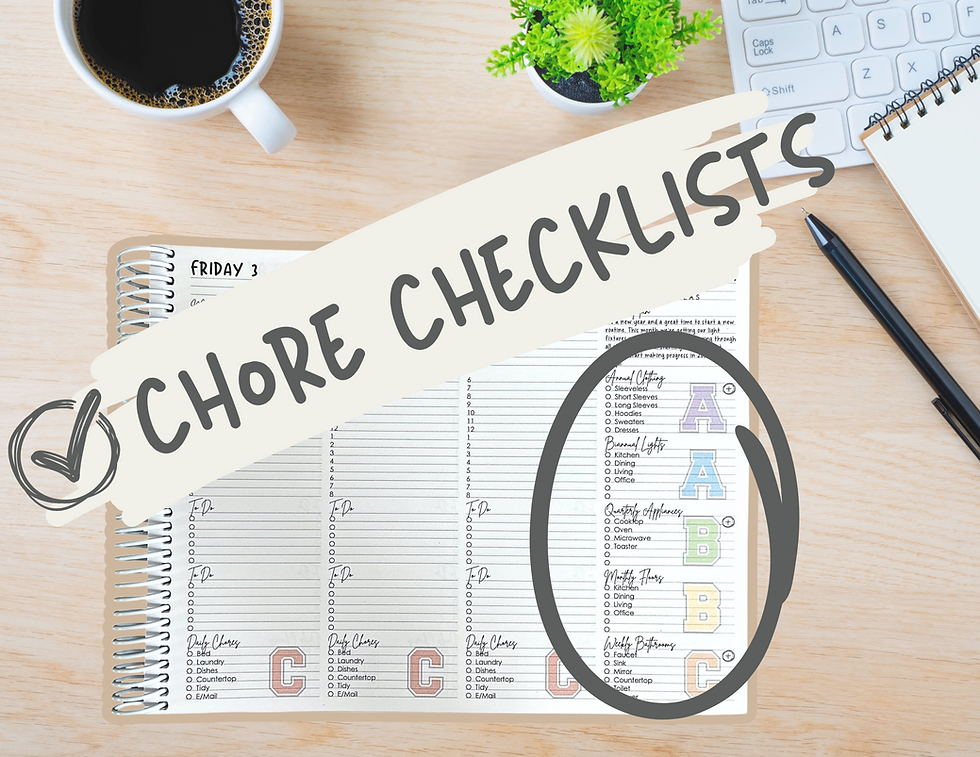
Try using this structured, but flexible Weekly Cleaning Schedule. Or if you are looking for a printable cleaning schedule, check out this Cleaning Planner. The Cleaning Calendar removes guesswork and spreads out the workload evenly. Weekly house cleaning stops feeling like a looming obligation and starts feeling like a manageable routine.
Why cleaning routines work better than to-do lists
To-do lists are always growing, adding new tasks at random each day. Whereas, routines repeat automatically in a predictable manner. Repetition is what builds habits, without relying on a burst of cleaning motivation and memory of what to clean next.
A house cleaning routine doesn’t ask you to remember—it reminds you through structure. Over time, tasks become expected, not debated. This is why routines outperform lists for busy moms. A well thought out Cleaning Schedule reduces thinking and increases follow-through.
Reducing mental load with a predictable cleaning routine
Predictability is calming. When you know what day it is in your routine, cleaning no longer steals mental space. You’re not constantly scanning your home for what’s “most urgent.”
This reduction in mental load is what makes cleaning feel easier—even if the work itself hasn’t changed. The peace comes from knowing you’re on track. Even if your home is not currently up to your standards of clean, you have the reassurance that you're on the right path.
Cleaning made easy even when life gets messy
What to do when you fall behind on your cleaning routine
Falling behind on your cleaning routine does not mean starting over or “fixing everything.” It simply means picking back up where you are. This is one of the most important mindset shifts for cleaning made easy, especially for busy moms managing unpredictable schedules.
Skipping guilt is what keeps easy cleaning routines intact long-term. Life happens—kids get sick, work weeks run long, and routines get interrupted. A flexible house cleaning routine is designed to expect missed days, not punish you for them.
With a realistic easy cleaning schedule, you don’t “catch up” by doing extra work. You continue forward with the next planned task. That’s how weekly house cleaning stays manageable instead of becoming overwhelming.
How to reset your cleaning routine without starting over
Resetting your cleaning routine doesn’t require a full house reset or a deep clean. It means doing the next right task, not everything at once. One load of laundry. One quick kitchen countertop. Small wins are not daunting and feel easy to achieve.
This approach keeps house cleaning made easy, even after disrupted weeks. Instead of spiraling into all-or-nothing thinking, you focus on forward motion. Small actions rebuild momentum faster than big, exhausting resets.
When your house cleaning routine is structured but flexible, it gives you permission to restart without pressure. That flexibility is what turns routines into habits—and habits into massive progress.
The “good enough” rule for busy moms and real-life cleaning
Let’s be clear about something: “good enough” is not giving up—it’s stepping into power. For busy moms, choosing good enough means choosing sustainability over burnout and progress over pressure. A home that supports your life, your family, and your energy is success. Perfection is not the goal—alignment is.
The goal of cleaning isn’t a perfect house. The goal is a beautiful life—and a home that supports it.
House cleaning made easy is about peace, not punishment. When your system works for you instead of controlling you, cleaning stops feeling like a constant source of stress or guilt and starts feeling like part of a life that actually works. You don’t need a perfect home—you need a supportive one.
A realistic easy cleaning routine gives you consistency without crushing your energy. It allows your home to be lived in, enjoyed, and reset—without the emotional weight. Over time, this mindset builds confidence, momentum, and certainty. And when you have certainty, you don’t quit. You show up—even when life gets messy.



Comments